




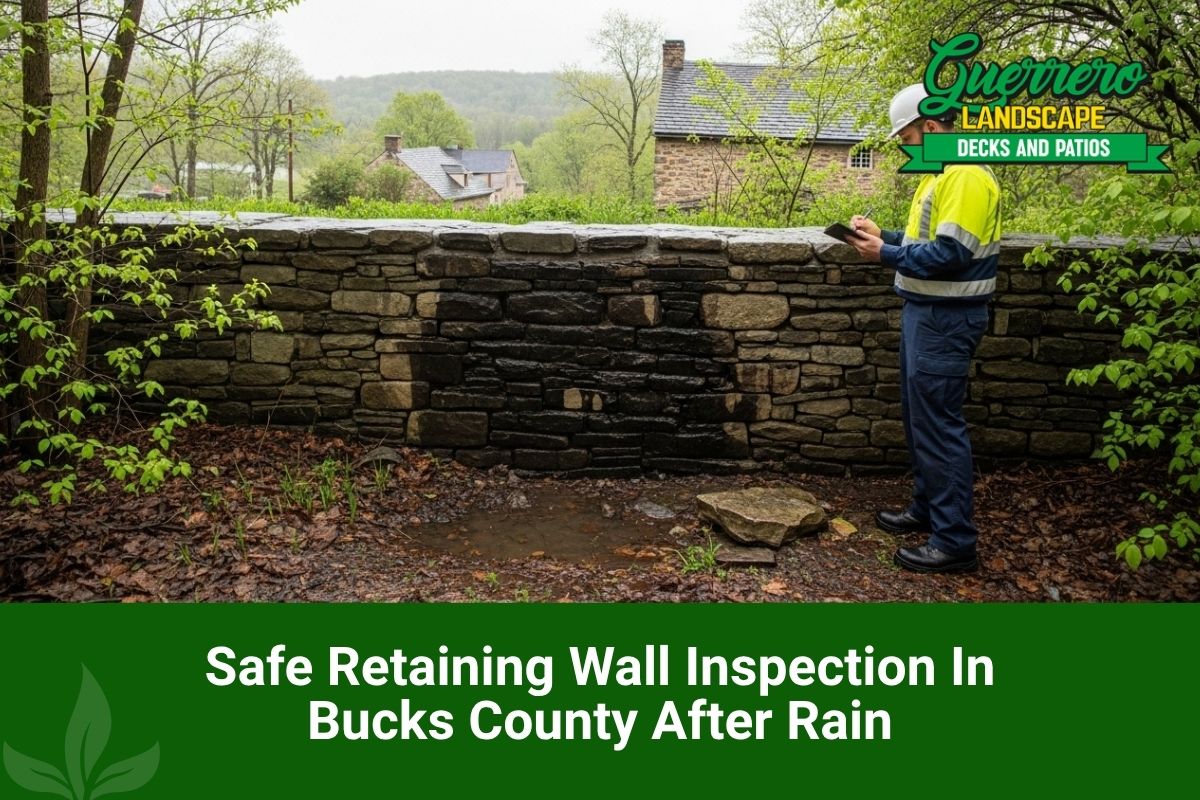
Safe Retaining Wall Inspection In Bucks County After Rain
Retaining wall inspection in Bucks County helps you protect your yard, home, and outdoor spaces after heavy spring rain. Small changes can look harmless at first, yet they may point to deeper movement, trapped water, or soil pressure behind the wall.
At Guerrero Landscape Inc, we believe simple checks can help property owners act early. Therefore, noticing wall leaning signs, drainage issues, and wall cracks before they grow can save stress and protect the beauty of your landscape.
Early Warning Signs That Protect Your Outdoor Space
Routine care is not only about appearance. It is also about safety. When soil pressure builds behind a wall, the structure may begin to shift, bow, or separate. As a result, a small concern can become a serious risk.
A careful retaining wall inspection in Bucks County can reveal movement before the wall becomes unsafe. In addition, photos and notes help you compare changes after storms, especially when spring rain damage leaves soft soil or wet spots behind the wall.
Watch for bulging or bowed wall sections.
Look for loose blocks, stones, or caps.
Check for new gaps near the base.
Note any soil washing away nearby.
Simple Tools That Make Wall Checks Much Easier
You do not need complex tools to begin. A tape measure, level, flashlight, gloves, and phone camera can help you inspect safely. These items make it easier to spot wall cracks, wet areas, and small shifts that may be missed.
For a more complete retaining wall inspection in Bucks County, use the same measuring points each time. This makes changes easier to track. Also, keep your photos in one folder so you can compare the wall after each season.
Heavy Drainage Problems Often Start After Spring Rainfall
Water is one of the biggest causes of wall trouble. After a storm, check where water flows and where it sits. Pooling near the base may mean the ground is not sloping away from the wall as it should.
Blocked weep holes, clogged pipes, and downspouts placed too close can create drainage issues. Over time, this adds weight behind the wall. Therefore, clearing leaves and debris helps reduce pressure and supports better long-term performance.
Clear leaves from weep holes and drains.
Move downspout water away from the wall.
Check for soft soil near the base.
Watch for stains that show trapped moisture.
Visible Cracks And Leaning Need Prompt Attention
Wall cracks can appear as thin lines, open gaps, or stair-step patterns. Some are small surface marks, while others show stress inside the wall. Because of this, measuring crack width helps you know whether the issue is growing.
Wall leaning signs also deserve close attention. A level or plumb line can show if the wall is tilting forward. Then, repeat the check later. If movement continues, soil pressure or water buildup may be pushing the wall out of place.
Soil Movement Behind Walls Can Create Hidden Risks
Soil behind the wall can change after heavy rain. It may settle, wash away, or become too soft to support the structure. As a result, the wall may lose strength even when the front still looks normal.
Gently check for ruts, low spots, exposed roots, or loose soil behind the wall. These signs may point to erosion. In addition, spring rain damage can create empty spaces that increase stress on the wall during future storms.
Professional Help Keeps Bigger Repairs Under Control
Some warning signs call for expert care. If the wall leans more than a little, has wide cracks, or moves after each storm, professional support is the safer choice. Guerrero Landscape Inc can inspect the wall and explain clear repair options.
Our team can also review deeper drainage issues and soil pressure concerns. For related support, visit our retaining wall service page to see how we handle wall repair and building needs.
Frequently Asked Questions
How often should I inspect my retaining wall?
You should check your wall at least once a year. However, after heavy rain, it is smart to inspect sooner. A seasonal retaining wall inspection in Bucks County can help catch small changes before they become costly problems.
What are common wall leaning signs to watch?
Common signs include a forward tilt, bowed sections, loose blocks, and gaps near the base. Also, if the top edge no longer looks straight, the wall may be moving under pressure.
Can small wall cracks become serious later?
Yes, small cracks can grow when water enters them or when soil shifts behind the wall. Therefore, measure and photograph them so you can see whether they change after rain or freezing weather.
Why do drainage issues damage retaining walls?
Drainage problems allow water to collect behind the wall. This adds extra weight and pressure. Over time, the wall may lean, crack, or bulge because it cannot release the trapped moisture.
When should I call a retaining wall contractor?
Call a contractor when cracks widen, leaning increases, or soil washes away behind the wall. We can review the wall and help you choose the right next step for safety.
Lasting Wall Care Starts With Smart Seasonal Habits
Regular care helps your wall stay strong and attractive. Clear drains, remove weeds, check grading, and seal small cracks when needed. These simple steps can reduce water problems and protect the wall through changing weather.
For help beyond a basic retaining wall inspection in Bucks County, our team is ready to guide you. You can view our full service options, see recent work in our project portfolio, or contact Guerrero Landscape Inc.
Check the wall after strong spring storms.
Keep drainage paths open and clear.
Record cracks, leaning, and soil changes.
Ask for help when movement keeps growing.