




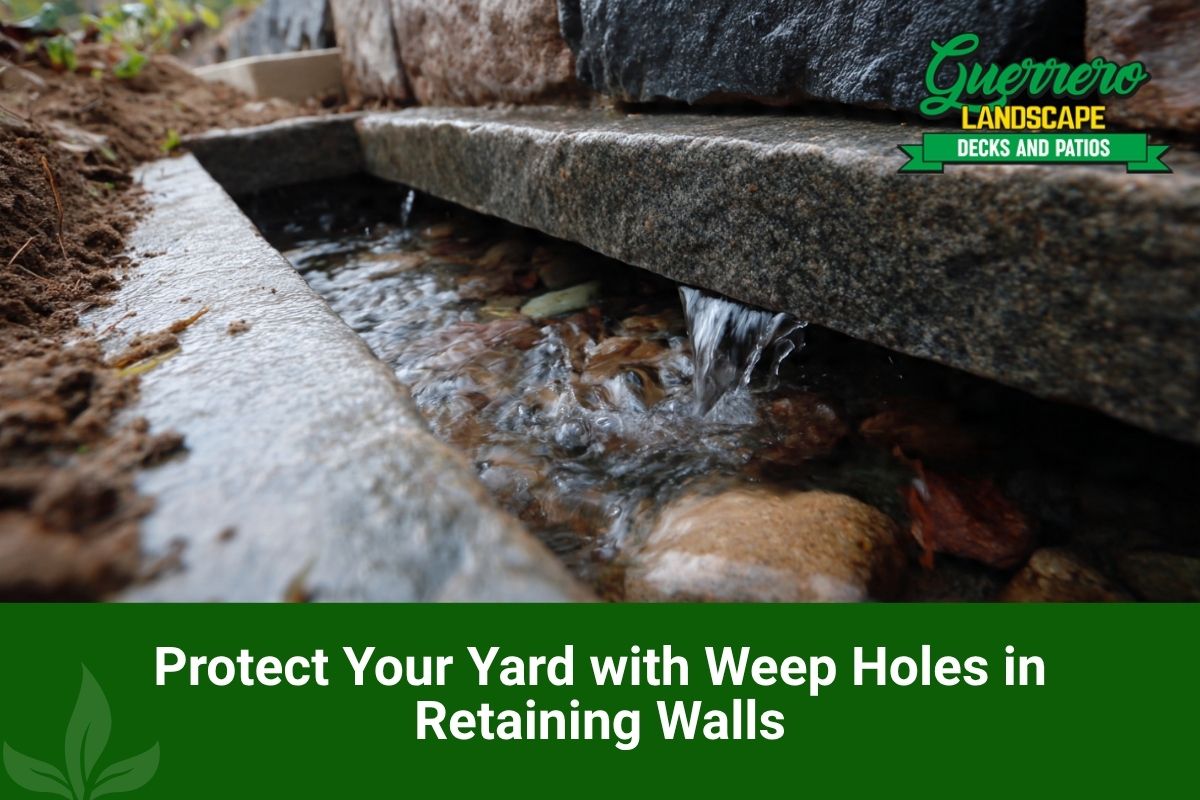
Protect Your Yard with Weep Holes in Retaining Walls
Secure the health of your outdoor space with weep holes in retaining wall in Bucks County. These small openings help move water out, so your wall stays safe, strong, and nice to look at.
Guerrero Landscape Inc helps homeowners understand early warning signs, such as a weep hole clogged, wall bowing signs, and hydrostatic pressure symptoms. With the right care, your landscape can stay protected through every season.
Why Weep Holes Matter for Retaining Walls in Bucks County
Weep holes in retaining wall in Bucks County help water escape from behind the soil. Without them, pressure builds slowly, and the wall can crack, shift, or lean over time.
Guerrero Landscape Inc knows that good drainage protects both safety and beauty. Because of that, these small openings play a big part in keeping outdoor areas strong and clean.
How These Openings Help Stop Serious Water Damage Early
Water behind a wall adds force every day. However, weep holes give that water a safe way out before it starts to push the wall forward.
Guerrero Landscape Inc sees that clear drainage helps protect patios, planting beds, and walkways. As a result, your yard stays safer during storms and after snowmelt.
They lower water pressure behind the wall.
They help stop cracks and surface damage.
They protect nearby hardscape and garden areas.
Common Signs Your Retaining Wall Drainage System Needs Attention
A weep hole clogged with dirt, roots, or debris can stop water flow. Then you may see damp spots, small puddles, or stains on the wall face.
Guerrero Landscape Inc also advises watching for wall bowing signs. Even small changes in shape can mean pressure is rising behind the wall.
Wet marks on the front of the wall
Puddles near the base after rain
Bulges, leaning, or small surface cracks
Understanding Water Pressure Behind a Retaining Wall Structure
Hydrostatic pressure symptoms begin when soil holds too much water. Then the soil becomes heavy, and that force starts pushing hard against the wall.
Guerrero Landscape Inc explains that this pressure can lead to cracks, bulges, and movement. Therefore, early action is important before small issues become large repairs.
Best Drainage Parts That Help Walls Last Much Longer
Strong drainage uses more than one feature. Along with weep holes, filter fabric, sloped fill, and gravel backfill help water move away from the wall.
Guerrero Landscape Inc recommends checking that each part works together. When the system is balanced, the wall can stay steady and dry for many years.
Filter fabric helps keep soil out of the drainage path.
Gravel moves water faster than compact soil.
Proper slope guides water toward the exit points.
Why Gravel Backfill Helps Retaining Walls Drain More Easily
Gravel backfill creates open space for water to pass through fast. Unlike soil, it does not pack tightly, so it lowers the chance of blocked drainage.
Guerrero Landscape Inc uses this material because it supports long-term wall strength. In addition, it helps reduce the risk of future pressure problems.
When a Drainage Retrofit Becomes the Right Next Step
A drainage retrofit may be needed when water problems keep coming back. For example, sunny-day seepage, soggy ground, or repeat bowing can show the current system is not enough.
Guerrero Landscape Inc can inspect the wall and suggest better drainage options. You can also learn more about expert wall solutions on the retaining wall contractors in Bucks County page.
Simple Maintenance Steps to Keep Weep Holes Working Well
Check the wall after heavy rain or wind. Then clear leaves, loose dirt, and small branches from each opening so water can pass out with ease.
Guerrero Landscape Inc also suggests a deeper seasonal cleaning. That simple habit helps stop another weep hole clogged problem before it grows worse.
Homeowners who want broader yard support can review the full range of outdoor care on the landscape and drainage services page.
Frequently Asked Questions
What do weep holes do in a retaining wall?
They let trapped water drain out from behind the wall. Because of this, they help lower pressure and protect the wall from damage.
How do I know if a weep hole is blocked?
You may see wet stains, puddles, or water leaking in the wrong place. Also, a weep hole clogged with debris can cause pressure to build behind the wall.
What are early signs of wall movement?
Look for bulges, leaning sections, or small cracks. These wall bowing signs often show that drainage is not working as it should.
Why is gravel used behind retaining walls?
Gravel backfill helps water move quickly through the wall system. As a result, it lowers moisture buildup and helps the structure stay stable.
When should I ask for professional help?
If you notice repeat seepage, bending, or cracks, it is a good time to act. Guerrero Landscape Inc can review your wall and recommend the right fix for your property.
Keep Your Bucks County Retaining Wall Strong and Looking Good
Weep holes in retaining wall in Bucks County are a smart way to protect your outdoor space. With proper drainage, regular checks, and the right materials, your wall can stay firm and attractive.
Guerrero Landscape Inc helps homeowners respond early to hydrostatic pressure symptoms, blocked drainage, and movement issues. To talk about your wall and yard needs, visit the contact Guerrero Landscape Inc team page today.
When you care for weep holes in retaining wall in Bucks County, you protect your landscape, your wall, and your peace of mind. In the end, weep holes in retaining wall in Bucks County can make a lasting difference for your property.